Want to know about Digital marketing services in Ranchi click below and read the guide
About the Author
Taha Imam is the creator of Writora, where he documents his learning journey in blogging, SEO,
and AI content creation. His approach focuses on practical experimentation, clarity-driven
content, and experience-based insights that help beginners grow sustainably online.
Through Writora, Taha shares what he actively tests and learns, not generic theories,
But real strategies are shaped by hands-on practice.
Top SEO Tools to Optimize Your Website in 2025
Every digital marketer needs the right set of tools to stay ahead in Google rankings. Check out our SEO rules 2025 guide for the latest strategies and actionable tips.
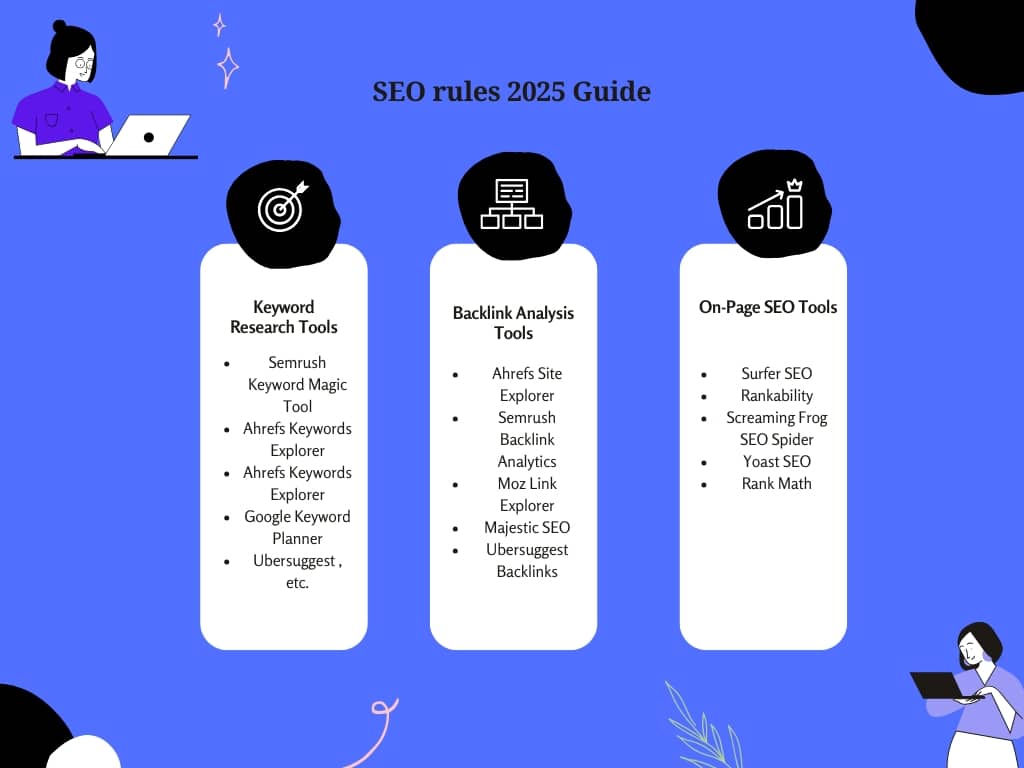
1. Keyword Research Tools.
Use modern keyword tools to find profitable keywords. Combine this with our updated SEO guidelines to maximize impact.
- Semrush Keyword Magic Tool
- Ahrefs Keywords Explorer
- Ahrefs Keywords Explorer
- Google Keyword Planner
- Ubersuggest, etc.
2. Backlink Analysis Tools
Track your backlinks and competitors’ links. Following the Writora SEO guide ensures you build high-quality link profiles.
- Ahrefs Site Explorer
- Semrush Backlink Analytics
- Moz Link Explorer
- Majestic SEO
- Ubersuggest Backlinks
3. On-Page SEO Tools
Optimize titles, headings, and meta descriptions. Always cross-check with the latest SEO rules & updates.
- Surfer SEO
- Rankability
- Screaming Frog SEO Spider
- Yoast SEO
- Rank Math
Implement these tools alongside the SEO rules 2025 guide to maximize your website’s ranking potential in 2025.
Pinterest is one platform where these SEO rules translate directly. Here’s a complete [pinterest seo strategy step by step] that applies these same principles.
SEO RULES 2025 GUIDE
Stop Doing 2023 SEO. Start Winning in 2025.
A blunt, practical deep-dive by a veteran SEO consultant with 10+ years in the trenches.
Stop Following 2023 Tactics. 2025 Is Different.
Let me be direct with you. The strategies that worked in 2022 and 2023 are actively hurting you now. I’ve watched teams – smart, well-resourced teams – cling to keyword-stuffing and thin content playbooks while their rankings quietly evaporated. It’s painful to watch.
The SEO Rules 2025 Guide isn’t about chasing shiny tactics. It’s about a fundamental rewiring of how Google values content. Two concepts dominate everything this year: Experience and Intent Purity. Google doesn’t just want pages that answer a query. It wants proof that a real human, with real expertise, lived through the topic and documented it honestly.
Intent Purity means your page must match one searcher intent and satisfy it completely – no hedging, no padding, no ‘check out our related services’ distractions baked into the H1. Get that wrong, and you won’t rank, full stop.
My honest take: I’ve seen dozens of sites crash because they ignored E-E-A-T, and 2025 won’t be any kinder. The Google SEO updates 2025 summary reads like a direct warning: prove you’re real, prove you know what you’re talking about, or get out of the way. |
The Big Shift: SGE, Entities, and Why Keywords Alone Are Dead
Understanding Search Generative Experience
Search Generative Experience (SGE) is Google’s AI-powered answer layer sitting above traditional blue links. It synthesizes information from multiple sources and delivers a direct answer – sometimes without a single click going anywhere. That’s the reality you’re operating in now.
Most teams are still optimizing as if it’s 2019. They chase keyword density, they build links, they tweak meta descriptions. None of that touches entity relevance – and entities are what SGE runs on.
An entity is a “thing” Google has definitively identified: a person, a place, a concept, a product. Google’s Knowledge Graph maps relationships between entities. If your content doesn’t clearly associate your brand with the right entities, you’re invisible to the AI layer – regardless of your keyword rankings.
What This Means Practically
Here’s what I tell every client who asks how to rank in AI Overviews:
- Build entity associations explicitly. Name your topic. Name the sub-topics. Link them internally. Use schema markup to tell Google what everything is.
- Become a source, not just a page. AI Overviews pull from pages Google already trusts. That trust is built through mentions, citations, and consistent entity signals — not just page authority.
- Answer the follow-up, not just the question. SGE anticipates follow-up queries. Your content should too. Structure each piece to address the 3-5 questions a reader would ask next.
- Drop thin variations. If you have 40 pages targeting micro-variants of the same keyword, Google sees low-value duplication. Consolidate. One authoritative page beats ten mediocre ones every time.
Quick reality check: Keywords still matter as signals. They tell Google what the page is about. But they’re the floor now, not the ceiling. Entity clarity and topical depth are what separate page-one winners from everyone else in 2025. |
The E-E-A-T Update: Prove You’re Human
Google’s E-E-A-T guidelines added a second ‘E’ – Experience – on top of Expertise, Authoritativeness, and Trustworthiness. That single letter change carries enormous weight. It’s not enough to know your topic anymore. You have to have lived it.
I’ve reviewed hundreds of audit reports over the years. The sites winning in competitive niches right now are doing three things consistently well that most sites completely ignore.
The Three Non-Negotiables
1. Author Bios That Actually Prove Something
A generic author bio that says ‘John is a content writer passionate about health’ is useless. Useless. Google’s quality raters are trained to spot thin authority claims instantly.
What a real E-E-A-T author bio needs:
- A real name – no pen names, no ‘The Editorial Team’
- Specific credentials: years of experience, certifications, job titles, employers
- A verifiable online presence: LinkedIn, published work, speaking engagements
- A real photo – actual photos, not stock imagery
- A link to a dedicated author page with their other published content
2. Original Data and First-Hand Insights
Regurgitating what ten other sites already said won’t cut it. Google can tell. What it rewards is content that adds something new to the conversation: a survey, a case study, a personal test result, a before/after from actual client work.
I ran an experiment with a mid-size B2B client last year. We replaced three generic ‘ultimate guides’ with shorter, data-heavy reports based on their own customer data. Rankings for those pages climbed from page 3 to page 1 within 11 weeks. Original data is a moat.
3. Real Photos and Documentation
Stock photography is a trust killer. If you’re writing about how to tile a bathroom and every photo is a Getty watermarked image, Google’s quality raters – and your readers – will notice. Real process photos, real before/afters, real screenshots of your actual work matter.
Build experience signals into your content systematically:
- Include timestamps of when you personally did the thing you’re writing about
- Add ‘Last tested on [date]’ disclosures for how-to content
- Embed real testimonials with names, company names, and dates
- Reference specific tools, versions, and platforms you personally used
- Disclose affiliations transparently – readers reward honesty, and so does Google
E-E-A-T isn’t a checklist you tick once. It’s a reputation you build systematically across every content asset you produce. Sites that treat it as a box-checking exercise are going to keep losing ground to those that genuinely invest in author credibility. |
Technical Realities: Core Web Vitals Are the Baseline
Here’s something I repeat to every client who wants to skip the technical conversation: Core Web Vitals are the price of admission now, not a differentiator. If you’re failing them, you’re playing with a handicap before the content battle even starts.
The metric that doesn’t get enough attention in most Google SEO updates 2025 summary coverage is Time to Interactive (TTI). Everyone obsesses over LCP and CLS – which matter – but TTI is where most sites quietly bleed rankings.
Time to Interactive: The Ignored Metric
TTI measures how long until a page is genuinely usable – not just visually rendered, but functionally interactive. Bloated JavaScript, third-party scripts, tag manager sprawl – all of it delays TTI. On mobile connections, the damage is severe.
What I audit for on every technical review:
- JavaScript execution time. Audit your JS bundle. Lazy-load anything that doesn’t need to execute on initial render. A 400kb JS payload firing on page load is a problem.
- Third-party script audit. Count every third-party tag firing on your site. Chat widgets, analytics, retargeting pixels – each one costs TTI milliseconds. Kill what you don’t need.
- Server response time (TTFB). If your Time to First Byte is above 600ms, fix your hosting or caching before touching anything else. Everything downstream suffers.
- Mobile-first everything. Google indexes your mobile version. If your team is designing desktop-first and ‘adapting’ for mobile as an afterthought, you’re building the wrong thing.
- INP (Interaction to Next Paint). This replaced FID, and it’s stricter. If your pages are event-handler-heavy –
- think filters, accordions, chat – test INP specifically, not just the CWV composite score.
Don’t obsess over perfect scores. A site at 72 on PageSpeed Insights consistently publishing expert content will beat a site at 98 with nothing to say. Technical performance is the floor. Content and authority are the ceiling. But don’t ignore the floor — a cracked foundation undermines everything above it. |
The 2025 SEO Action Plan: A 3-Step Audit
I’m going to give you a 3-step framework I use with every new client engagement. It’s not glamorous. It doesn’t involve buying new tools or hiring an AI copywriter. It’s the actual work that moves rankings.
Step 1: Update and Consolidate Old Content
Your existing content is almost certainly your biggest untapped asset. Most sites have 40-60% of their pages that generate zero organic traffic. Zero. That dead weight hurts your crawl budget and dilutes your overall topical authority signals.
Run this audit process:
- Pull 12 months of GSC data. Filter for pages with impressions but zero clicks. These have visibility but fail to earn trust – check the title, meta description, and E-E-A-T signals.
- Identify merge candidates. If you have 4 posts covering slight variations of one topic, pick the strongest URL, consolidate the content, and 301 redirect the others.
- Add experience signals to thin content. Every how-to page that lacks a personal anecdote, a real photo, or a date-stamped test needs one. This is quick work with high ROI.
- Update statistics and sources. A 2021 stat cited in a 2025 article is a credibility problem. Refresh every data point you can verify.
- Re-evaluate intent alignment. Does the page still match the searcher’s intent for its primary keyword? Search behaviours shift. Your content should shift with them.
Step 2: Build Topical Authority Through Content Clusters
Topical Authority is the concept that dominates how serious SEOs think about content architecture in 2025. Google’s systems reward sites that demonstrate depth and breadth on a subject, not sites that write one decent post and move on.
A content cluster has a pillar page – a comprehensive resource on a core topic – surrounded by cluster pages that go deep on subtopics and link back to the pillar. It’s not a new idea. But the sites executing it well are the ones eating everyone else’s lunch right now.
Build your clusters like this:
- Start with a topic map, not a keyword list. What does a genuine expert know about this subject? Map every sub-topic, every related question, every adjacent concept. That’s your cluster outline.
- Assign one page per intent. Don’t create two cluster pages that target the same underlying question from different angles. Google won’t know which to rank. You’ll cannibalize yourself.
- Internal link deliberately. Every cluster page links to the pillar. The pillar links to every cluster page. Anchor text matters – use descriptive, intent-clear anchors, not ‘click here.’
- Cover the topic completely. Use Google’s ‘People Also Ask’ and ‘Searches Related To’ as your guide for gaps. If your cluster doesn’t address a question that appears there, you have a gap.
- Build topical authority before building links. I see teams spending $10k/month on outreach while their site’s topical coverage has massive gaps. Fix the architecture first. Links amplify authority — they don’t create it from nothing.
Step 3: Digital PR to Build Real Authority Signals
Backlinks still matter. But not all backlinks matter equally, and the gap between a quality link and a garbage link is wider than it’s ever been. One mention in a respected industry publication is worth more than 200 directory links. Not an exaggeration.
Digital PR is the strategy that bridges content quality and off-page authority. It’s about creating assets worth linking to – original research, tools, data visualizations, controversial but defensible opinions – and then putting them in front of journalists, bloggers, and creators who cover your space.
My Digital PR checklist for 2025:
- Run an original survey. Even 200 responses on a relevant industry question give you data no one else has. Data earns links passively for years.
- Build a free tool. A calculator, a checklist generator, and a simple diagnostic – free tools in your niche attract links from every ‘resources’ roundup in the space.
- Publish a controversial but backed opinion. Not inflammatory. Provocative in a smart, evidence-based way. Industry journalists love ‘contrarian expert takes’ with data behind them.
- Get your authors quoted in the press. HARO has competitors now – use Connectively, Qwoted, and Terkel to get expert quotes into publications. Each placement builds author entity authority.
- Do competitor backlink analysis. See who’s linking to your top 3 competitors but not to you. Those are your warm outreach targets. They’ve already proven they’ll link to content like yours.
The cluster + digital PR combination is unstoppable. Topical Authority tells Google you’re an expert. Digital PR signals tell the rest of the industry that it agrees. When those two things align, rankings follow. Timeline reality: Don’t expect overnight results. A properly executed cluster strategy with consistent PR takes 4-6 months to show meaningful SERP movement. Agencies that promise faster are selling you something. |
Here’s the truth about the SEO Rules 2025 Guide: none of this is complicated. It’s just uncomfortable. It means admitting that the shortcuts you relied on are gone. It means investing in real expertise, real content, and real relationships instead of hacks that worked for a cycle and then burned you.
The sites winning in 2025 aren’t winning because they found a new trick. They’re winning because they built something genuinely useful, proved it came from humans who know what they’re talking about, and made sure Google’s infrastructure could read and load it without friction. That’s it. That’s the whole game.
Stop waiting for the next algorithm update to tell you what to do. Build for humans. Prove your expertise. Fix your technical foundation. Earn links you’d be proud to show in a board meeting. The rankings will follow
Frequently Asked questions? FAQS
Q1: Is there an SEO rules 2025 PDF I can download or reference?
There’s no single official PDF from Google that lists “the rules.” What does exist are Google’s Search Essentials (formerly Webmaster Guidelines) and the Search Quality Evaluator Guidelines — both publicly available on Google’s site. The Search Quality Evaluator Guidelines in particular is worth reading cover to cover. It’s 170+ pages, but it’s the closest thing to a rulebook you’ll find. Everything else claiming to be an “SEO rules PDF” is someone’s interpretation, not gospel.
Q2: What are the best SEO rules to follow in 2025?
The ones that haven’t changed in a decade and never will: create content for humans first, prove genuine expertise, earn links rather than buy them, and make your site fast and easy to crawl. What’s new in 2025 is the weight Google places on Experience signals — real first-hand knowledge, real author credentials, original data. The best SEO rule in 2025 is simple: if a quality rater looked at your page, would they trust it? If the honest answer is “probably not,” fix that before anything else.
Q3: What are Google’s official SEO guidelines for 2025?
Google’s guidance lives in three main places. First, Search Essentials — the technical baseline every site must meet. Second, the Search Quality Evaluator Guidelines — the human-reviewed framework that informs how Google’s algorithm values pages, including the full E-E-A-T framework. Third, the Google Search Central Blog — where algorithm updates and best practice changes are announced. No PDF roundup replaces reading those primary sources directly.
Q4: Can you give a real search engine optimization example for 2025?
Sure. Say you run a personal finance blog and you want to rank for “how to build an emergency fund.” The 2023 approach was: write a 2,000-word post, hit the keyword 8–10 times, get a few backlinks. The 2025 approach is: publish that guide under a named author with verifiable financial credentials, include your own data or a real client example, add a date-stamped “last reviewed” note, link it to a cluster of related pages (budgeting for beginners, high-yield savings accounts, etc.), and build one or two quality mentions in personal finance publications. Same topic. Completely different execution.
Q5: What is SEO, in plain terms?
SEO — Search Engine Optimization — is the practice of making your website more likely to appear when people search for topics related to your business or content. It covers three areas: technical (making your site fast, crawlable, and properly structured), on-page (making your content genuinely useful and relevant to specific search queries), and off-page (earning trust signals like backlinks and brand mentions from other credible sites). Done well, it’s one of the highest-ROI marketing channels you can invest in. Done poorly, it’s wasted time chasing algorithm shortcuts that evaporate.
Q6: What is SEO in digital marketing, and how does it fit the bigger picture?
SEO sits at the top of the digital marketing funnel — it captures demand that already exists. Someone typing “best project management software for small teams” is already looking for a solution. SEO puts you in front of that person at exactly the right moment, without paying per click. Compared to paid ads, SEO takes longer to build but compounds over time. A well-ranking page can generate traffic for years. In a full digital marketing strategy, SEO feeds your content, your email list, your remarketing audiences, and your brand authority simultaneously.
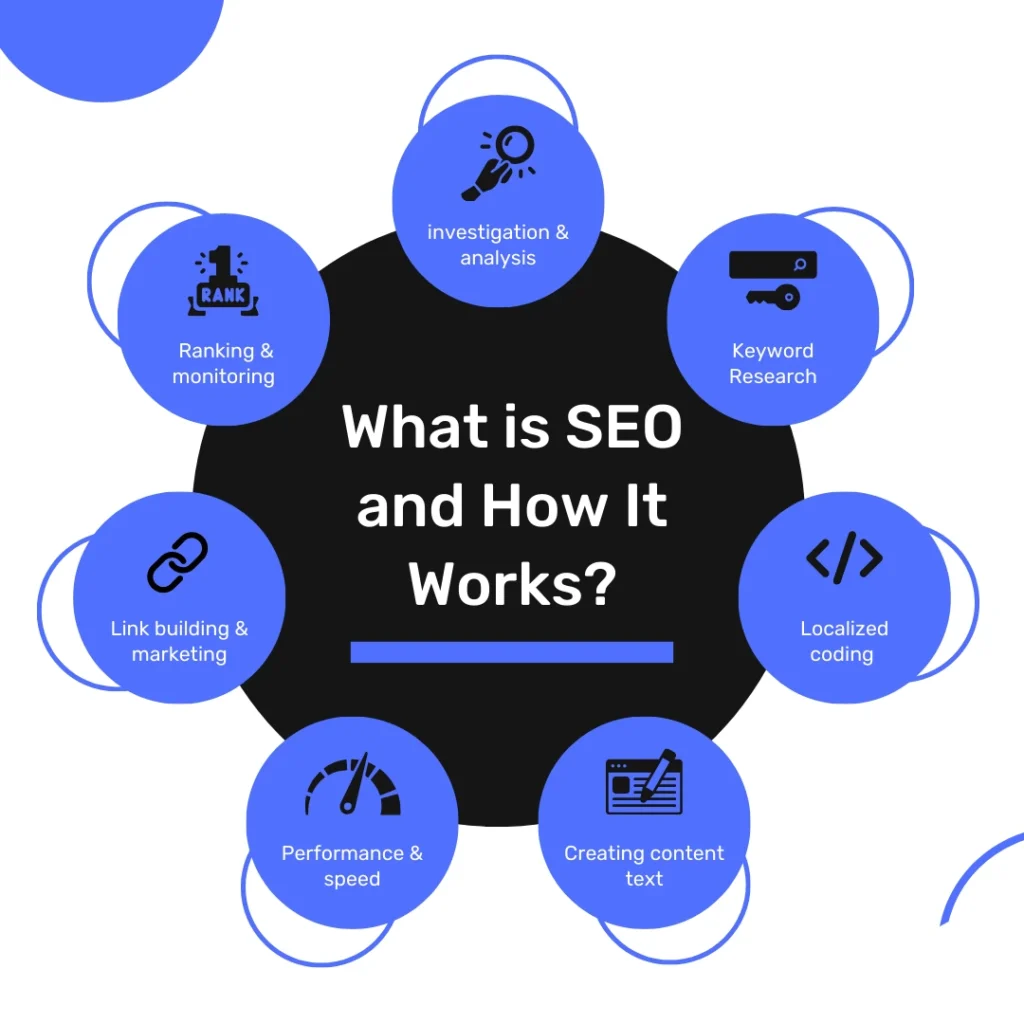
Q7: What is SEO and how does it actually work?
At its core, Google’s job is to return the most relevant, trustworthy result for any query. SEO is the process of convincing Google that your page is that result. Google’s crawlers scan your site, index your content, and then rank it based on hundreds of signals — relevance to the query, page experience, site authority, content quality, and entity associations. You influence those signals through technical optimization, content depth, and earning external credibility signals (backlinks, mentions, citations). It’s not magic and it’s not manipulation. It’s just systematically making your site the best answer to the questions your audience is already asking.
Q8: Is a Google SEO course worth it in 2025?
Depends entirely on which one. Google’s own free courses through Google Search Central and Google Skillshop are worth doing — they’re accurate by definition and regularly updated. For paid courses, look for ones that were updated in 2024 or 2025 and cover SGE, E-E-A-T, and topical authority. Skip anything still leading with “keyword density” or promising first-page rankings in 30 days. The fundamentals of SEO aren’t hard to learn. The discipline to execute them consistently over months — that’s where most people struggle, no course fixes that.